 EN
ENCiclo de vida do bicho-da-seda
Introdução
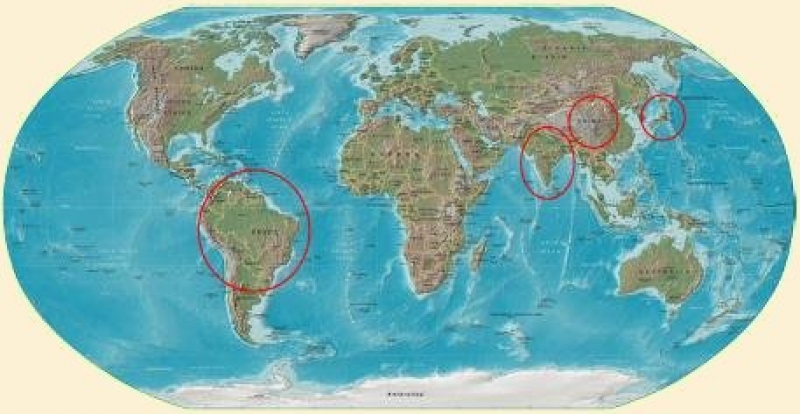
A sericicultura, é uma arte milenar que começou na China há cerca de 5000 anos. Esta, compreende a cultura da amoreira, a criação do bicho-da-seda e a produção dos fios de seda para a indústria têxtil, sendo considerada uma das actividades agroindustriais mais antigas praticadas pelo Homem (6). Os quatro maiores produtores mundiais de seda são a China, o Japão, o Brasil e a Índia.
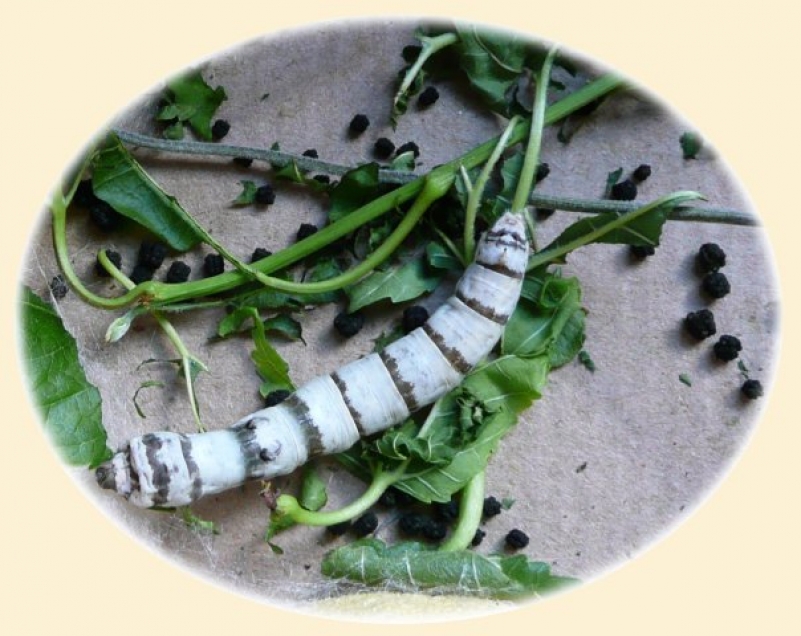
A lagarta da espécie Bombyx mori, designada por bicho-da-seda é um insecto com grande importância económica, já que os seus casulos são utilizados no fabrico da seda(2).
Cerca de 95% da seda produzida no mundo provém desta espécie (6). Este insecto encontra-se totalmente domesticado devido à forte manipulação genética a que foi sujeito, com o objectivo de obter uma espécie boa produtora de seda. O fio de seda é um produto filamentoso de origem proteica, que é produzida nas glândulas sericígenas das lagartas do bicho-da-seda (6).
A maior ameaça à sericicultura são as doenças que directamente podem atacar o bicho-da-seda, tais como: o vírus da poliedrose nuclear; o vírus da poliedrose citoplasmática; o vírus da flacidez infecciosa e o vírus da densonucleose (3,5).
O Ovo
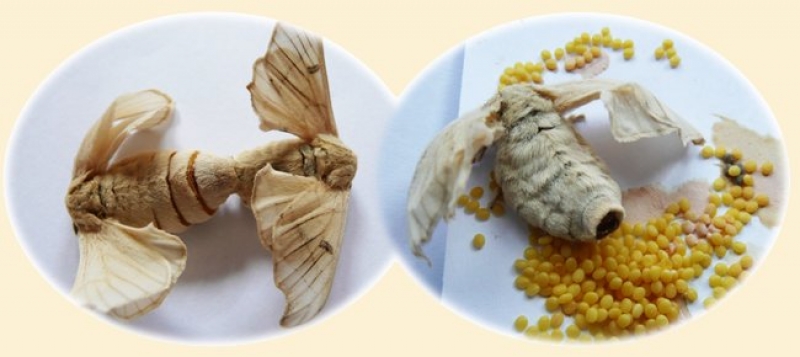
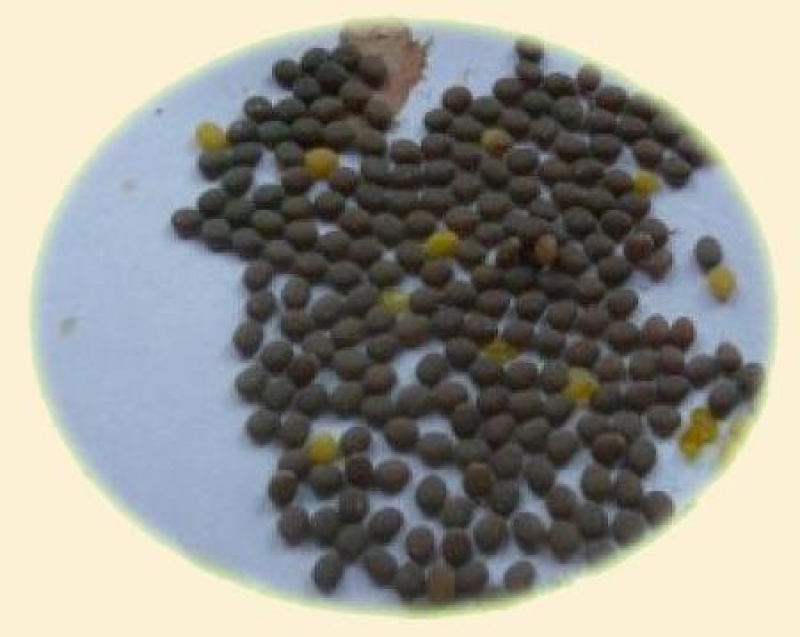
O ovo mede aproximadamente 1 a 1,3 mm, sendo oval e achatado. Depois da postura tem cor amarela, se fecundado passa a amarelo-forte, alaranjado e finalmente cinzento (6). Após a quebra do período de dormência a lagarta sai do ovo ao fim de 7 a 21 dias (1).
Lagarta ou Larva
O ciclo larvar vai desde a eclosão do ovo até à fase de formação do casulo, tem a duração de cerca de 24 dias (1,3).
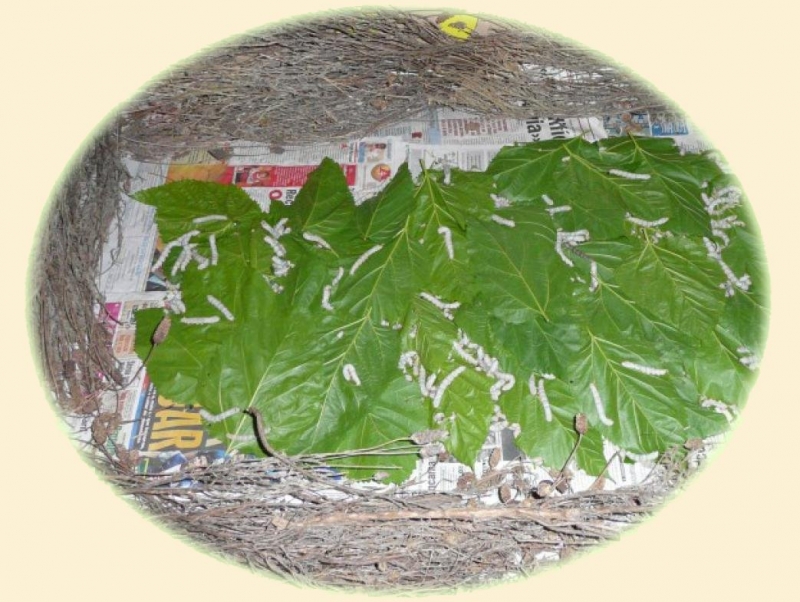
Neste estágio, a lagarta alimenta-se exclusivamente das folhas da amoreira que é originária da China, botanicamente pertence à família Moraceae e ao género Morus (3).
A lagarta quando sai do ovo tem de 1 a 3 mm, cresce muito e necessita de trocar de exoesqueleto quitinoso, esta troca é designada de muda, ocorrendo 4 mudas de pele, nas quais a lagarta deixa de se alimentar (1,3). O espaço de tempo entre as mudas de pele são denominados de idade ou instar, passando a larva desde a eclosão até à formação do casulo por cinco idades (3).
Formação do Casulo
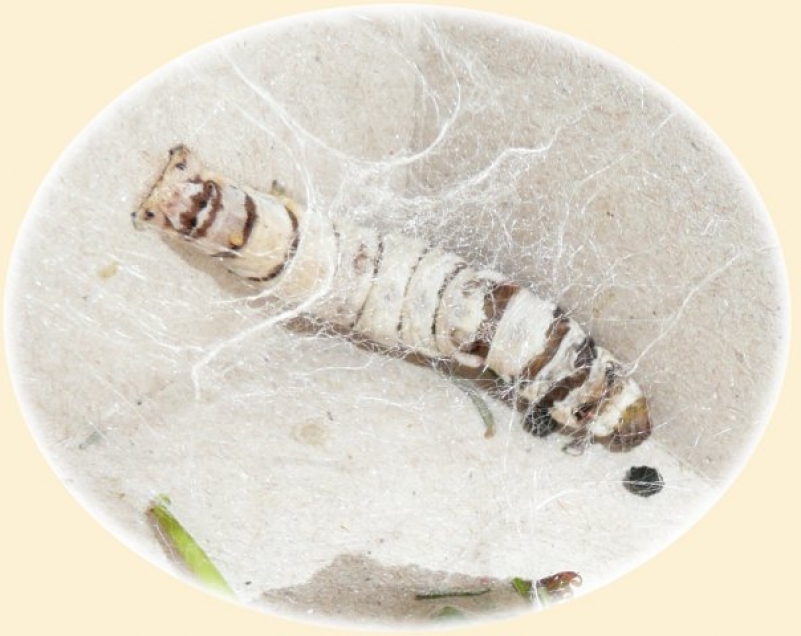
A lagarta na 5ª idade, apresenta 7 cm de comprimento e o órgão mais desenvolvido é a glândula sericígena, no final desta idade a lagarta tece um casulo de seda, constituído principalmente pelas proteínas fibroína e sericina, que são produzidas pelas células da glândula da seda e expelidas pela boca (1). O mecanismo de formação do fio de seda nas glândulas sericígenas é único, e muito estudado. A glândula sericígena é dividida morfologicamente em 3 partes: posterior, mediana ou central e anterior. A parte posterior ou região secretora sintetiza as moléculas de fibroína e a proteína P25, que formam o fio insolúvel. Na região mediana há secreção de sericina, que fornece ao fio uma camada aderente. A parte anterior é responsável em secretar um fio simples de seda pronto para a formação do casulo, nesta região encontra-se também a mucoidina, que auxilia durante a passagem do fio de seda na glândula. A fibroína solidifica-se no momento que o fio sai, no entanto a camada de mucoidina permanece mole por um certo tempo, permitindo que a lagarta cole entre si as diferentes camadas de fio para tecer o casulo (4).
O Casulo
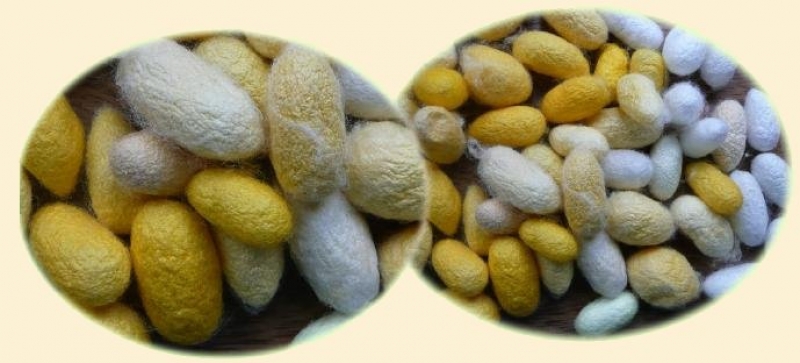
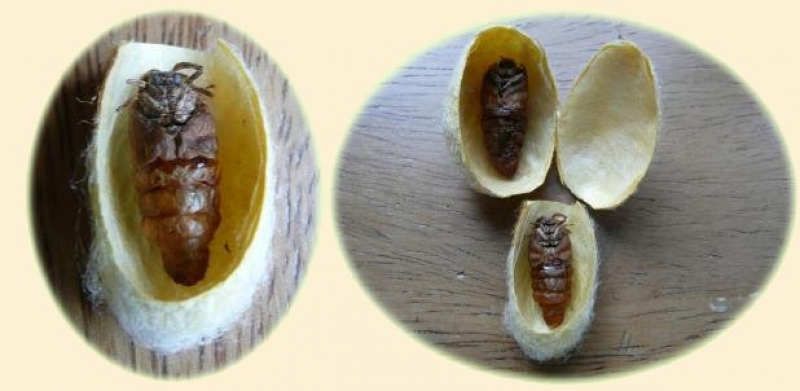
Os casulos apresentam diferentes cores e diferentes formas, que dependem das raças:
- quanto à cor: a branca é relativa às raças chinesas e europeias; a amarela às raças europeias e a esverdeada às raças indianas.
- quanto à forma: arredondada é característica das raças chinesas; ovalada das raças europeias, e em forma de amendoim das raças japonesas.
Existe preferência pelos casulos brancos devido a apresentarem maior facilidade no tingimento (3).
Pupa ou Crisálida
No interior do casulo o corpo da lagarta transforma-se, formando a pupa ou crisálida, continua o processo de transformação até à formação do indivíduo adulto, a mariposa. Este estágio dura cerca de 10 dias (1).
O Adulto
Para sair do casulo a mariposa liberta um líquido alcalino que corrói uma das extremidades do casulo abrindo uma abertura para a sua saída (1). Neste estágio o insecto não se alimenta e é nesta fase que se dedica à reprodução da espécie. Depois do acasalamento a fêmea faz a postura de 200 a 500 ovos, e tal como o macho morre. Este estágio tem a duração de cerca de 10 a 16 dias (1).
Bibliografia:
(1) Brancalhão, Rose M. C. - Bicho da seda. Acesso online: http://www.seab.pr.gov.br/arquivos/File/complexo_da_seda/b_mori.pdf. 2005.
(2) Lira, Michael J. S. - Susceptibilidade do ovário de Bombyx mori L., 1758 (lepidoptera:bombycidae) ao vírus da poliedrose nuclear múltiplo. Dissertação apresentada ao curso de Pós-graduação em ciências biológicas (área de concentração – Biologia Celular), da Universidade Estadual de Maringá, para obtenção do grau de Mestre em Ciências Bio. Maringá-PR. 2007.
(3) Brasil. Coordenador: Luiz Antonio F. Cascão - Estudos para o desenvolvimento de atividades agrícolas e industriais integradas. Projectos especiais. Sericicultura. s/d.
(4) Silva, Patrícia R. e Zanetti, Ronald - Resposta técnica produzida pelo Serviço Brasileiro de respostas técnicas. 2006.
(5) Watanabe, Hitoshi - Genetic resistance of the silkworm, Bombyx mori to viral diseases. Current Science, Vol. 83, nº4, Special scction: Recent advances in silkworm biology. http://www.wormspit.com/bombyxsilkworms.htm. 2002.
(6) Zanetti, Ronald- Notas de aulas de ENT 110- Sericicultura. DEN/UFLA. s/d.